
Mapping Old English Literature
Contents: Summary | Tools | Sources | Steps
Mariana Zaragoza, last updated August 2026

This project is a mind map that organizes the surviving corpus of Old English poetry by manuscript source rather than by author or genre. The map is built around the four codices that preserve nearly all Old English verse—the Nowell Codex, the Junius Manuscript, the Vercelli Book, and the Exeter Book—with additional branches for fragments that survive outside those manuscripts, relevant historical background, and primary historical sources. The goal was to create a way to visualize a reading list, so that anyone who wanted to learn about Old English literature could have a comprehensive plan in front of them. This does not include EVERY poem.
Now how did I do that?
Summary
The assignment here is to add historical data to a contemporary map. The intention is to highlight how that historical information contrasts against our contemporary boundaries in order to better understand our position against the events of the past.
Here, I’m looking at how to think about the historical locations of the Indigenous communities in what is now California against the invading Spanish missionaries and soldiers in order to better see which tribes the Spanish were attempting to colonize.
This project is about exploring 19th-century California history through maps. Over the course of the one century, the land changed hands four times (depending on method of count).
For the second map in the series, we took existent data regarding the historic lands of the Indigenous communities to compare against mission placement and Spanish expansion of colonial control.
Tools
For this project, I used the following, specific tools (i.e., machines and programs). Each are listed generally, noting what type of machine or program, before naming the specifics used in this sample.
Hardware
- Laptop computer, Mac
Software
- Mind-mapping tool—Whimsical.com
Contextual Overview
Old English poetry survives almost entirely by accident of manuscript preservation: the vast majority of extant verse is copied into just four codices. Beyond the four codices, a handful of poems survive only as fragments. The mind map includes these as well as historical background and primary sources. A mind map is especially helpful as many scholars believe that reading Old English is something more cyclical rather than linear. However, I also wanted to preserve the fact that reading with supporting texts can be helpful.
Sources
The content of this mind map was pulled together from different sources: notes and knowledge from prior coursework on Old English Literature, targeted online searches, books I own to cover which translations include which poems.
Steps
This section provides a narrative description of the steps taken to complete the process. Each step includes a general statement of the goal and then provides a short description of how the project lead implemented the step. At first, I was meant to create a timeline of medieval books but since the years are only an educated guess I would not be able to do this. I then made a sort of “curriculum” but rather than listing poems in some random order and also talking to colleagues, I found that there should be more freedom in the way the poems are read and decided on a mind map. The most important part will be deciding on the items in your mind map.
Once I had my list of items to be included, I put them into groups: historical background, each of the four codices, primary sources, etc.
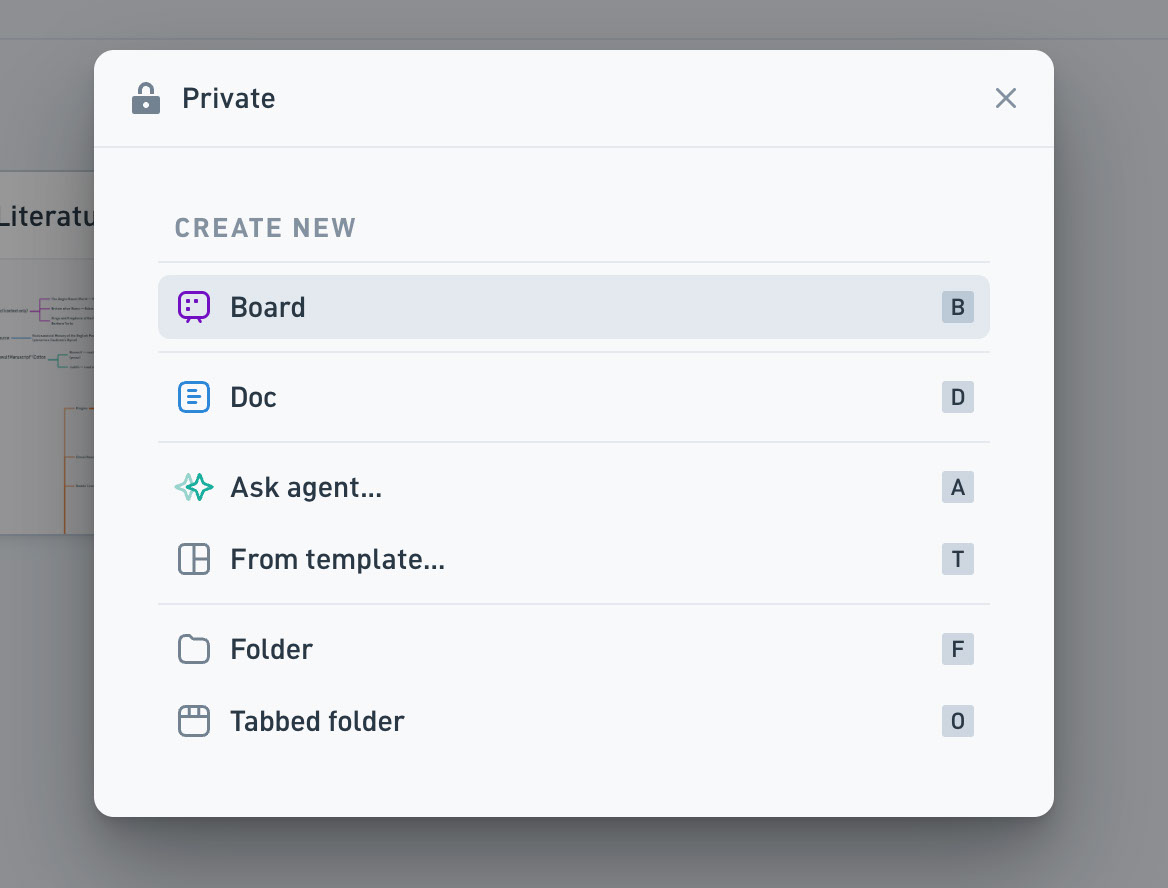
Then I started the mind map. I looked online for free and accessible platforms and Whimsical.com came up.


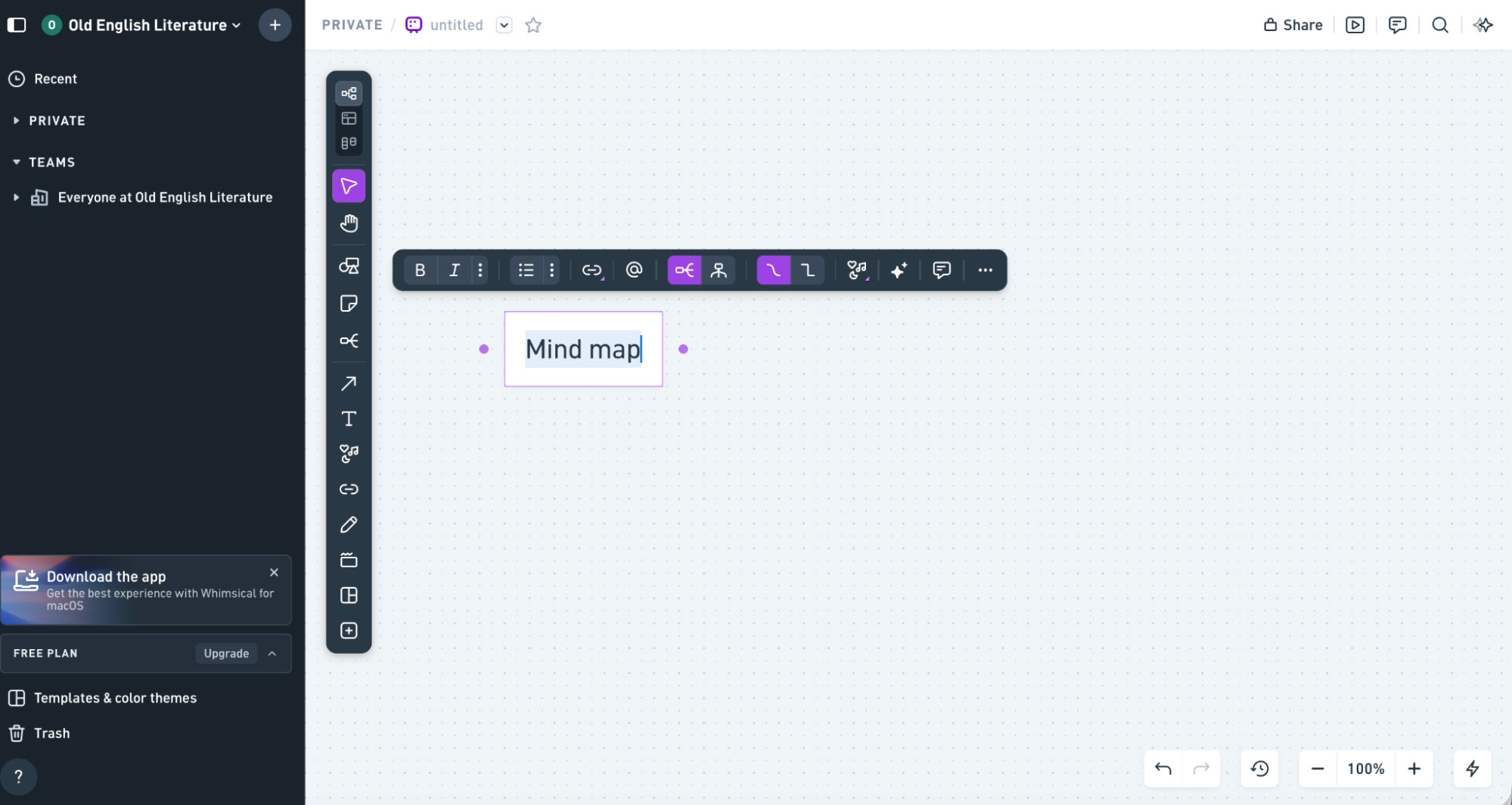
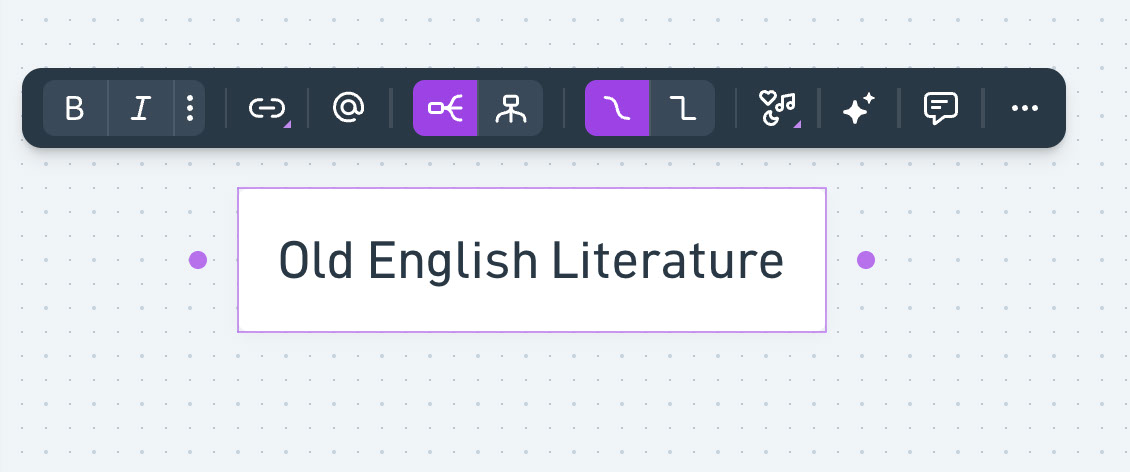
- You are also able to change the appearance slightly by using the top bar to switch from horizontal or vertical or by changing the lines from curvy to angular.

